
Cat Chin Acne: What to Do About Those Tiny Black Spots (Without Making Things Worse)
Are the black specks on your cat's chin just dirt—or something that needs attention? Here's how to spot the warning signs, avoid common mistakes, and build an easy bowl-and-grooming routine.

You notice what looks like pepper under your cat's chin. You wipe it once. A few days later, it's back.
It's tempting to scrub harder, squeeze the spots, or buy the first "acne treatment" you see. But a cat's chin is delicate, and not every dark mark is ordinary dirt. The smarter first step is to identify what you're seeing, keep the feeding area clean, and know when a veterinarian should take over.
Here's the good news: there are practical habits you can control today, even when the underlying cause is not obvious.
Is It Dirt, Blackheads, or an Irritated Skin Problem?
Feline chin acne often appears as small dark, pepper-like spots around the chin or lower lip. These may be comedones—plugged hair follicles. But food residue, skin infections, and other conditions can look similar. You cannot diagnose the cause from a photograph alone.
A Few Black Specks
Look for recurring dots without swelling, open sores, or obvious pain. Keep the area clean and monitor changes.
Red, Crusty, Swollen, or Painful
Bleeding, pus, sores, spreading redness, and sensitivity to touch deserve veterinary attention.
Veterinary dermatology guidance explains that abnormal keratin buildup can block follicles, sometimes progressing to inflammation or infection. Read VCA's explanation of chin acne in cats.
Why Does My Cat Keep Getting Black Spots?
There isn't one confirmed trigger for every cat. Changes in follicle keratinization are central to feline acne; grooming habits, skin oil, stress, and environmental factors may play a role. A dirty or scratched bowl is worth reviewing, but the bowl alone is not a diagnosis.
Oil and Blocked Follicles
Excess keratin and natural oils can collect around hair follicles, producing blackhead-like plugs.
A Hard-to-Groom Spot
The chin is not always easy for a cat to clean, especially after wet-food meals.
Food and Moisture Residue
Food, saliva, and water can collect on fur near the chin and around the feeding station.
Worn Feeding Surfaces
Scratches or surface wear can make some bowls more difficult to inspect and wash thoroughly.

Five Common Mistakes That Can Make a Sore Chin Worse
Don't pinch, pop, or scrape the spots. Trauma can make sensitive skin more inflamed.
More pressure isn't better care. Avoid stiff brushes and rough cloths on the affected skin.
Never improvise with human creams, rubbing alcohol, peroxide, or essential oils. Ask your veterinarian about cat-appropriate treatment.
Even a new bowl needs frequent cleaning. Pay attention to wet-food residue and water-bowl film.
Swelling, discharge, spreading sores, or a cat pulling away when touched calls for veterinary care.
A Gentle Four-Step Chin and Feeding-Station Routine
The goal is not to aggressively clean away every black speck. It's to reduce ordinary dirt and residue without irritating delicate skin—and to recognize when professional treatment is needed.
Check for red skin, swelling, open spots, or discomfort. If the chin looks inflamed or painful, skip home scrubbing and consult your vet.
For food on intact fur around the mouth, use a soft damp cloth. Don't press on blackheads or broken skin. Ask your vet how to clean suspected acne lesions.
Wash food bowls after wet-food meals and clean water bowls daily. Rinse off soap and allow dishes to dry before reuse.
Track whether spots spread, become sore, or keep returning. Persistent cases may require a diagnosis and targeted treatment.

Is Your Cat's Bowl Easy Enough to Keep Clean?
If an old plastic bowl is visibly scratched, it may be harder to scrub clean and inspect for food residue. Smooth, nonporous surfaces such as stainless steel and glass are often easier to clean consistently. VCA notes that switching away from plastic dishes and washing bowls daily may help some cats with chin acne—but it does not guarantee a cure.
| What matters | Scratched plastic bowl | Smooth stainless steel bowl |
|---|---|---|
| Surface | May develop grooves with use | Nonporous and generally durable |
| Cleaning | Worn spots can be harder to inspect | Easy to rinse and check for residue |
| Long-term use | Replace when damaged | Built for frequent washing |
| Cat chin acne | One factor worth reviewing | A hygiene upgrade, not a treatment |
Wide & Shallow 304 Stainless Steel Cat Bowl
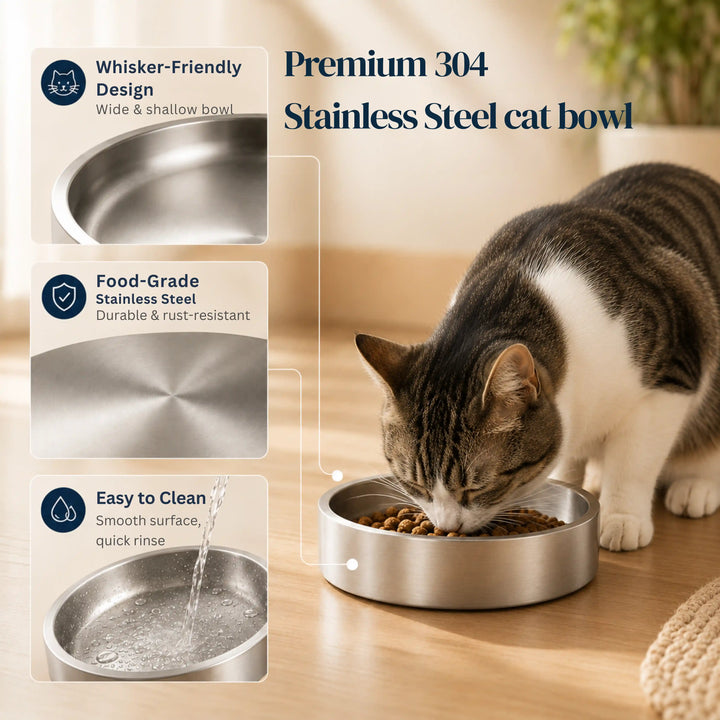
Made with food-grade 304 stainless steel, a smooth curved interior, and a non-slip silicone base, this bowl is designed for food or water and quick everyday cleanup. Its wide, shallow profile also gives cats easier access to their meals.
Practical buying tip: If you're replacing both a scratched food dish and water dish, consider the two-pack so you can wash and rotate bowls more easily.
Explore the Stainless Steel Cat Bowl →When Can Pet Wipes Help With Chin Cleanup?
Sometimes the simplest task is removing a little wet food from the fur around your cat's mouth. A soft damp cloth is a good starting point. A cat-appropriate grooming wipe can also be convenient for normal surface dirt on healthy fur only when its label permits use near the face.
Do not confuse grooming wipes with medicated acne wipes. A regular pet wipe is not a treatment for blocked follicles, bacteria, or inflamed skin. Avoid direct contact with the eyes and mouth, and do not wipe sore, bleeding, or infected-looking areas unless your veterinarian approves the specific product.
100-Count Plant-Based Pet Grooming Wipes
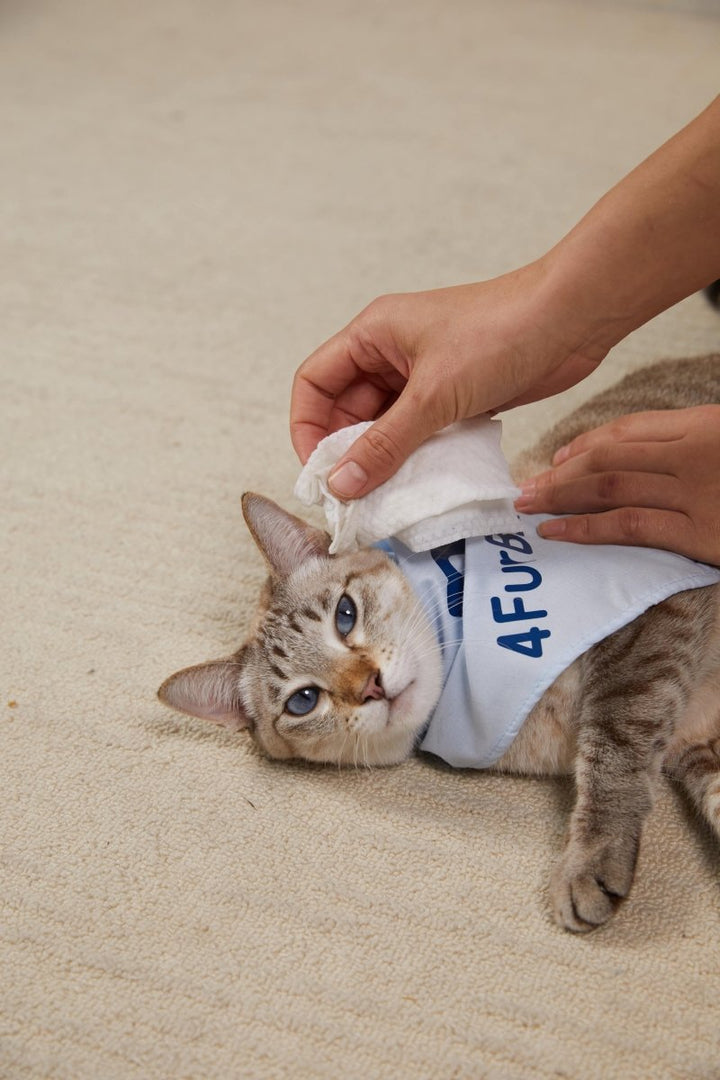
For general coat, paw, and after-meal grooming, 4FurBaby's extra-thick wipes offer a convenient home-cleanup option. The range includes Unscented Aloe and lavender-scented choices; for cats, start by considering the unscented option and checking label instructions for the exact area you plan to clean.
They are a grooming convenience—not a substitute for a veterinary acne-care product.
Explore 4FurBaby Pet Wipes →When Should a Vet Check Those Black Spots?
Make an appointment if you notice swollen skin, pus, bleeding, open sores, a foul smell, pain, persistent scratching, or worsening patches. Recurrent spots also merit an exam if they don't respond to basic hygiene. Other skin conditions can resemble feline chin acne.
Cat Chin Acne FAQs
Can I tell whether black chin spots are acne just by looking?
No. The dots may resemble blackheads, but other skin and grooming issues can look similar. A veterinarian can examine persistent or inflamed lesions.
Should I squeeze or scrub the blackheads away?
No. Picking and aggressive scrubbing can damage the skin and increase irritation. Ask a veterinarian about safe cleaning if acne is suspected.
Will switching to stainless steel cure feline acne?
Not necessarily. A clean, smooth bowl may help reduce one possible aggravating factor in some cats, but bowl replacement is not a guaranteed treatment.
Can I wipe my cat's chin with regular pet wipes?
For ordinary food on healthy surrounding fur, follow the wipe's label and avoid the eyes and mouth. Never assume a general grooming wipe is suitable for treating acne lesions, broken skin, or infection.
Why does my cat's chin acne keep returning?
Feline chin acne can recur, and its cause isn't always clear. Persistent or repeated outbreaks deserve a veterinary assessment rather than increasingly aggressive home cleaning.
Keep the Bowl Clean. Keep Chin Care Gentle.
Choose tools that make daily hygiene easy to stick with—and seek veterinary help when the skin needs more than routine grooming.
Shop 4FurBaby Cat Bowls →


Leave a comment