
Cats may show interest in yogurt, whipped cream, ice cream, or other sweet human foods—but that does not mean they experience sweetness the way people do.
Research on feline taste receptors shows that cats lack a functional T1R2 sweet-receptor component. Interest in a sweet food is therefore more likely to involve aroma, fat, texture, temperature, or learned attention than sugar itself.
The quick answer
Cats do not detect sweetness the way humans do because the feline TAS1R2 gene is nonfunctional, preventing formation of the typical T1R2/T1R3 sweet receptor. If a cat is interested in a dessert, the attraction is more likely to come from other sensory cues than from sweetness.
The attraction is probably not sweetness.
A cat approaching ice cream, whipped cream, or another dessert may be responding to aroma, fat, texture, temperature, or learned attention around the food.
Yogurt is not a necessary cat treat.
Many adult cats digest lactose poorly, and flavored or sweetened yogurt can add unnecessary calories and ingredients. Choose cat-formulated treats instead.
For picky eating, focus on the complete diet.
Aroma, moisture, texture, temperature, and a calm feeding environment may influence food acceptance. Sudden appetite loss should be treated as a health question rather than solved with sweet foods.
1. Why cats can’t taste sweet
Most people taste sweetness through a receptor made from two parts: TAS1R2 and TAS1R3. Cats are different. Research published in PLOS Genetics found that domestic cats have a nonfunctional version of the sweet-receptor gene TAS1R2, which means the normal sweet receptor cannot form.
This helps explain why apparent interest in a sweet food should not be interpreted as a preference for sugar. The same food may also provide aroma, fat, protein, texture, temperature, or social cues that attract the cat.

2. So why do some cats act obsessed with sweet foods?
A food can contain many sensory cues at once. A cat can be interested in a dessert without being attracted to its sweetness.
Your cat may be reacting to:
- Fat and dairy aroma: many desserts contain cream, butter, or other animal-derived ingredients.
- Texture: creamy, smooth, lickable foods can be extra tempting.
- Aroma: cats rely heavily on smell when deciding whether something is food.
- Other food cues: some desserts also contain dairy, egg, or other ingredients with aromas cats may investigate.
- Learned attention: repeated human reactions can reinforce approaching or reaching for the food.
So yes, your cat may look interested in a sweet snack. But that does not mean sugar is good for them, useful for training, or worth adding to their routine.

3. Yogurt and Dairy Are Not Necessary Cat Treats
Yogurt is sometimes suggested as a small treat, but cats do not need dairy and many adult cats digest lactose poorly. A cat-formulated treat is a more straightforward default.
Milk and other dairy products can cause diarrhea or other digestive upset in cats that have low lactase activity. Sweetened or flavored yogurt also adds ingredients and calories that are not nutritionally necessary.
If your cat prefers lickable textures, use a cat-formulated treat or a complete wet food rather than relying on human desserts. Treats should remain a small part of the overall diet.

4. What flavors do cats actually care about?
Cats are obligate carnivores. Cornell Feline Health Center explains that cats rely on nutrients found in animal products and evolved around prey-style eating: high protein, moderate fat, and minimal carbohydrates.
The more useful nutritional point is that cats require a complete and balanced diet formulated for their life stage. Aroma, moisture, texture, and animal-derived nutrients are more relevant to feline nutrition than adding sugar.
Cats also have species-specific nutritional requirements. Taurine, for example, is essential for cats, which is one reason complete commercial diets are formulated to meet feline nutrient needs rather than simply offering individual meats or human foods.

5. Better ways to make cat food more appealing
If your real problem is “my cat is picky” or “my cat won’t eat their food,” sugar is not the answer. Try small, cat-friendly adjustments first.
Warm the aroma
Gently warming wet food can make the smell more noticeable. Keep it warm, not hot.
Add moisture
A small amount of water can change moisture and texture if your cat accepts it. Do not dilute a diet so much that the cat eats substantially less.
Use meat-based toppers
If you use a topper, choose one intended for cats and keep it small enough that the complete diet remains the nutritional foundation.
Keep bowls clean
Wash food bowls regularly and remove dried food residue. Smooth, easy-to-clean materials make the feeding area simpler to maintain.
6. Keep Treats Small and the Main Diet Complete
Treats can be useful for enrichment, training, or medication routines, but they should not displace a complete and balanced cat food.
Use small portions, avoid turning human desserts into routine rewards, and pay attention to the total calories your cat receives from extras during the day.
If your cat suddenly needs increasingly tempting foods to eat, loses interest in their normal diet, or loses weight, contact your veterinarian rather than continuing to escalate toppers and treats.
A simple feeding bowl can support a cleaner meal routine
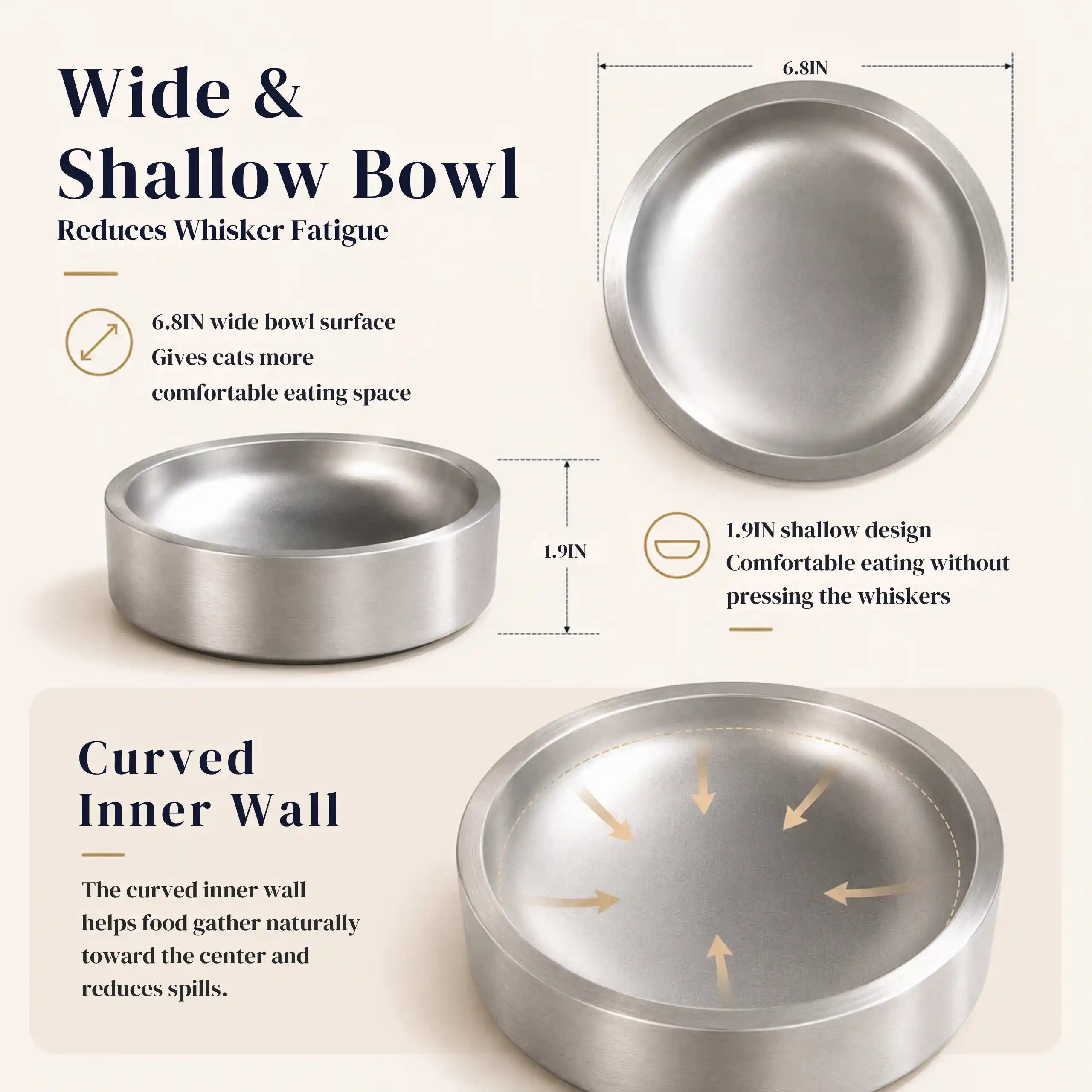
Sweet foods are not the answer to picky eating, but a clean, practical feeding setup is still worth getting right. The 4FurBaby Wide & Shallow 304 Stainless Steel Cat Bowl can be used for food or water as part of an everyday feeding routine.
- Wide, shallow shape provides an open eating surface.
- 304 stainless steel is smooth and easy to inspect during cleaning.
- Non-slip base helps reduce sliding on smooth floors.
- Suitable for food or water.
7. What to avoid giving your cat
A cat’s limited sweet perception does not make desserts nutritionally neutral. Human sweet foods add unnecessary calories and may contain ingredients that are unsafe for pets.
Sweetened yogurt
Often contains sugar, flavorings, or dairy that can upset a cat’s stomach.
Ice cream
Usually high in dairy fat and sugar, and some flavors are unsafe for cats.
Whipped cream
It may look harmless, but it is still dairy-heavy and not a useful cat treat.
Candy or baked goods
Recipes may contain chocolate, caffeine, alcohol, raisins, spices, or other ingredients that are inappropriate or unsafe for cats.
FAQ: Cats, Sweet Taste, and Safe Treats
Can cats taste sweet?
Cats lack a functional T1R2 component of the typical mammalian sweet receptor, so they do not detect sweetness the way humans do. Interest in a dessert can still come from aroma, fat, texture, temperature, or learned attention.
Why does my cat like ice cream if cats can’t taste sugar?
The attraction may come from dairy aroma, fat, creamy texture, temperature, or learned attention around the food rather than sweetness itself.
Can cats eat yogurt?
Yogurt is not a necessary cat treat. Many adult cats digest lactose poorly, and sweetened or flavored products add unnecessary ingredients and calories. Use a cat-formulated treat instead.
What flavors do cats like most?
Cats are obligate carnivores and are nutritionally adapted to animal-derived nutrients. Food aroma, moisture, temperature, texture, and individual preference can all influence acceptance.
Are sweet treats bad for cats?
Sweet human treats are nutritionally unnecessary and add calories. Some also contain ingredients such as chocolate, caffeine, alcohol, raisins, or other components that can be unsafe for pets.
What should I use to attract a picky cat to food?
Try an appropriate texture, temperature, or moisture adjustment while keeping the complete diet nutritionally balanced. If appetite changes suddenly, your cat stops eating, or weight loss occurs, contact your veterinarian.
Do cats need high animal protein?
Yes. Cats are obligate carnivores and rely on nutrients found in animal products. Choose complete and balanced cat food appropriate for your cat’s life stage.
Keep reading


Leave a comment