
Water fountains work well for some cats, but they are not the only way to support hydration.
If the pump, filter, or cleaning routine becomes difficult to maintain, a simpler bowl-based setup may be easier to keep fresh consistently.
A practical alternative is to offer multiple clean water bowls in suitable locations and use moisture-rich food when it fits your cat’s diet. Small amounts of added water can also work for some cats if they continue eating normally.
The quick answer
You do not have to use a water fountain. Offer fresh water in multiple clean bowls, try different bowl shapes and locations, and consider wet food or a small amount of added water in food if your cat accepts the change. If your cat’s drinking changes suddenly or seems inadequate, ask your veterinarian for guidance.
A bowl setup can be easier to keep clean.
If fountain maintenance is making regular water changes harder, several simple bowls may be easier to keep fresh and clean.
Try changing the bowl shape and location first.
Some cats appear to prefer wider or shallower bowls, while others care more about location or freshness. Try a wide stainless steel cat bowl in a quiet location and compare it with your cat’s current setup.
Food can help with hydration too.
Wet food already brings more moisture into the diet. You can also add a small amount of water to wet food or meat puree if your cat still enjoys it.
1. The fountain is not the goal. Hydration is.
Some cats truly love fountains. If your cat drinks more from one and you do not mind cleaning it, great. Keep doing what works.
If fountain maintenance makes regular cleaning difficult, it is reasonable to rethink the setup. The goal is fresh, accessible water that your cat will use and that you can maintain consistently.
Cornell Feline Health Center explains that keeping cats hydrated is an important part of health maintenance and lists fresh water, wet food, and adding water to food as ways to support fluid intake.

2. Put water where your cat already lives
One bowl in one corner may not suit every cat. Multiple water locations can give your cat more choice, especially in larger or multi-cat homes.
VCA Animal Hospitals suggests changing the water-bowl location or offering multiple bowls in different places throughout the home.
AAFP and ISFM environmental guidelines recommend providing multiple, separated key resources such as food, water, litter boxes, resting areas, scratching areas, and play spaces. Individual preferences still vary, so observe which locations your cat actually uses.
- Place one bowl near a favorite nap area.
- Place one in a quiet hallway or bedroom corner.
- Keep water away from the litter box.
- Try keeping water separate from food if your cat seems picky.
- In multi-cat homes, provide enough separated water locations to reduce competition.

3. Try a Wider, Shallower Bowl
Some cats appear to dislike their whiskers touching the sides of a bowl or getting wet, while others show no obvious preference. Bowl shape is worth testing, but it is not the only factor that affects drinking.
A wide, shallow bowl may suit cats that avoid narrow dishes. Stainless steel is also smooth, easy to rinse, and easy to inspect during regular cleaning.
Not every cat has the same preference. Some choose ceramic, some metal, and some simply prefer a particular location or water depth. Test what your cat actually uses.

4. A simple multi-bowl setup to try
You do not need to make this complicated. Offer more than one bowl in different suitable locations, keep them equally fresh, and watch what your cat actually chooses.
Use wide bowls
A wider opening may suit cats that avoid narrow bowls or dislike whisker contact.
Spread them out
Put bowls in different quiet areas instead of making one single water station.
Refresh daily
Refresh the water frequently and wash and rinse the bowl daily to limit residue and bacterial buildup.
Watch the favorite spot
If one bowl gets used more, leave it there and build your setup around that habit.
5. Wet Food Can Contribute Meaningful Moisture
Cats that eat wet food obtain a meaningful amount of water through meals and may drink less from a bowl than cats eating mostly dry food.
Cornell Feline Health Center notes that wet cat food is typically about 70% to 80% water, making it an important dietary source of moisture.
That does not mean water bowls are optional. Fresh water should still be available. But it does mean hydration does not only come from drinking at the bowl.

6. A small amount of water in a cat-safe puree can add moisture
If your cat already eats a cat-safe meat puree or lickable treat, mixing in a small amount of water can add some moisture without changing the main diet.
Start with a small amount, mix well, and make sure your cat continues eating normally. Treats should remain a small part of the overall diet.
Use products intended for cats and avoid seasoned human broths or foods containing onion or garlic. If your cat has kidney, heart, urinary, or other medical concerns, ask your veterinarian before adding broth, flavorings, or changing the diet.
- Start with a small splash of water.
- Mix it into wet food or a meat puree.
- Keep texture close to what your cat already likes.
- Do not force it if your cat refuses the change.

7. Choose Bowls That Are Easy to Clean Consistently
A bowl that is easy to rinse, wash, and inspect can make regular maintenance simpler. Stainless steel bowls are one practical option because the smooth surface is straightforward to clean.
A non-slip base can also help reduce sliding on smooth floors if your cat tends to push the bowl while drinking.
Clean the base and the area underneath the bowl regularly so trapped moisture or residue does not build up.

A simple stainless steel bowl can make the routine easier
If you prefer a bowl-based setup, a clean stainless steel cat bowl can be simpler to wash and refill than a fountain with pumps and filters.
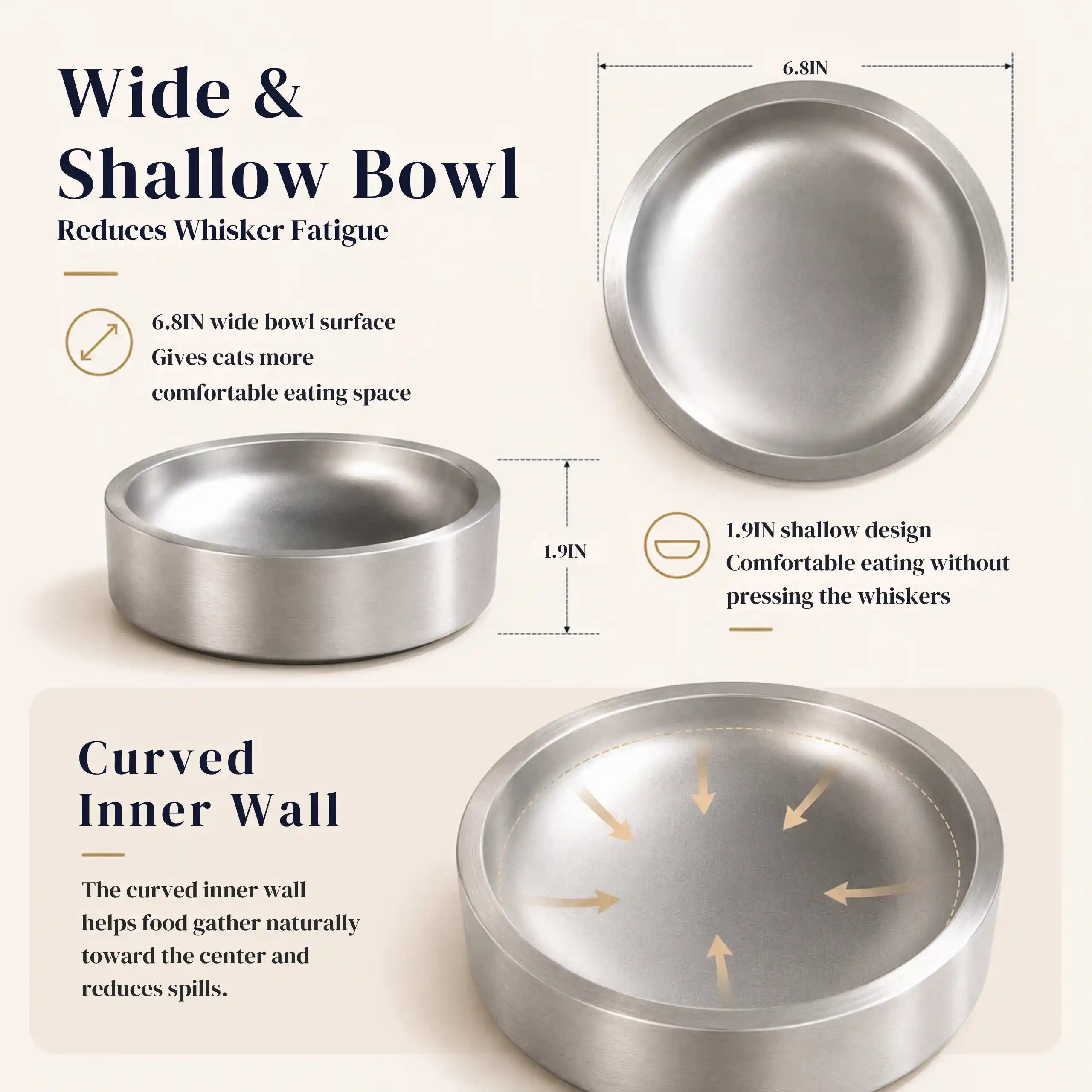
The 4FurBaby Wide & Shallow 304 Stainless Steel Cat Bowl has a wide, shallow shape and a non-slip base, making it suitable for food or water and easy to incorporate into a multi-bowl setup.
- Wide, shallow shape gives cats more open access to the water surface.
- Stainless steel surface is simple to rinse and wipe clean.
- Non-slip base helps reduce sliding on smooth floors.
- No pump, no filter, no tiny hidden fountain parts to scrub.
- Suitable for use as one of several water bowls around the home.
8. When not drinking is a vet question
Some cats are simply bowl-picky. But a sudden change in drinking, eating, peeing, or energy is different.
Contact your veterinarian if your cat’s drinking changes suddenly, they stop eating, vomit repeatedly, seem weak or dehydrated, or begin urinating much more or less than usual. Repeated straining with very little or no urine is an emergency and needs urgent veterinary care.
Watch the litter box
Changes in urine amount or frequency can be useful observations to share with your veterinarian, but they do not identify the cause by themselves.
Watch appetite
A cat that stops eating or drinking, especially with other symptoms, should be discussed with a veterinarian promptly.
Watch behavior
Hiding, weakness, vomiting, or sudden low energy should not be ignored.
Ask your vet
Especially for kittens, senior cats, kidney concerns, urinary issues, or chronic health conditions.
FAQ: Getting Cats to Drink Without a Fountain
Do cats really need a water fountain?
Not necessarily. Some cats prefer fountains, while others use clean bowls readily. The important points are reliable access to fresh water, suitable placement, and a setup you can keep clean.
How many water bowls should I put out for one cat?
Offer more than one bowl in different suitable locations and observe which places your cat uses. Larger or multi-cat homes may benefit from additional separated water stations.
Should cat water be near food?
Some cats do not mind, but others drink better when water is placed away from food. Try both and see what your cat prefers.
Should water bowls be away from the litter box?
Yes, water should be kept well away from the litter box. Feline environmental guidelines recommend separating toileting areas from food and water resources.
Is a wide bowl better for cats?
Some cats appear to prefer wider, shallower bowls, particularly if they avoid dishes where their whiskers contact the sides. Other cats show little preference, so testing different shapes is reasonable.
Can I add water to wet cat food?
Yes, if your cat accepts it. Add a small amount at first and mix it in. If your cat refuses the texture, back off and try a smaller amount later.
Can I add water to meat puree or lickable treats?
A small amount of water can be mixed into a cat-safe puree if your cat continues to eat it normally. Keep treats limited, avoid seasoned human foods, and ask your veterinarian before changing the diet for a cat with medical conditions.
Is stainless steel good for cat water bowls?
Stainless steel is a practical option because the smooth surface is easy to wash and inspect. A wide stainless steel cat bowl can be one option in a multi-bowl setup.
How often should I clean my cat’s water bowl?
Refresh the water frequently and wash and rinse the bowl daily. Clean the base and the surface underneath the bowl as part of the routine.
When should I worry that my cat is not drinking?
If your cat suddenly stops drinking, stops eating, seems weak, vomits, urinates differently, or acts unlike themselves, contact your veterinarian.
Keep reading


Leave a comment