
A calmer bathroom starts with fewer surprises
When a cat has urinary trouble, it is tempting to look for one object that will fix everything. The more useful question is smaller: can the litter box remove a few avoidable stressors from the day? Sometimes it can—and material is only one part of that answer.
- A stainless steel litter box does not treat or prevent feline idiopathic cystitis (FIC).
- A roomy, stable, clean, easy-to-enter box can make the toilet area less frustrating for some cats.
- Steel may help because its smooth, non-porous surface is easier to wash thoroughly and resists lingering odor and stains.
- Sudden straining, repeated trips, blood in the urine, crying, or little to no urine needs veterinary attention—not a shopping trip.
First, FIC Is a Medical Problem—not a “Bad Bathroom Habit”
Feline idiopathic cystitis is a painful bladder condition diagnosed after other causes of lower urinary tract signs have been investigated. “Idiopathic” means that a single clear cause has not been identified. Stress can contribute to flare-ups in susceptible cats, but that does not mean stress is the only cause—or that buying a new box is treatment.
The signs can look like a litter box problem: frequent trips, straining, urinating outside the box, licking the genital area, crying while urinating, or blood in the urine. The same signs can also occur with stones, infection, or a urethral obstruction. The Cornell Feline Health Center advises that cats showing lower urinary tract signs need veterinary evaluation because the underlying causes are not interchangeable.
Emergency warning: A cat—especially a male cat—who repeatedly strains but produces little or no urine may have a urinary blockage. This can become life-threatening quickly. Contact an emergency veterinarian immediately.
How the Litter Box Becomes Part of the Stress Picture
Cats do not judge a bathroom by how neatly it fits beside the washing machine. They notice whether it smells familiar or sour, whether another cat can block the exit, whether the floor shifts under their feet, and whether a machine starts thumping while they are in a vulnerable position.
That is why the box is best viewed as one piece of a larger environment. Research and current feline guidance use the idea of multimodal environmental modification: reduce stress across several parts of the cat's life rather than looking for one magic fix. The UC Davis School of Veterinary Medicine describes this broader environmental approach as a mainstay of FIC management alongside the individual veterinary plan.
What can make a toilet feel unsafe
- A box that is too short to turn around in
- A hood with only one entrance and exit
- Another pet waiting near the doorway
- A noisy appliance or automatic cleaning cycle
- Strong fragrance or lingering urine odor
- A high step for a stiff or painful cat
What usually makes it easier
- Enough floor space to enter and turn normally
- An open view and more than one escape direction
- A stable base on a non-slip surface
- Unscented litter the cat already accepts
- Daily scooping and regular washing
- Separate boxes in separate locations
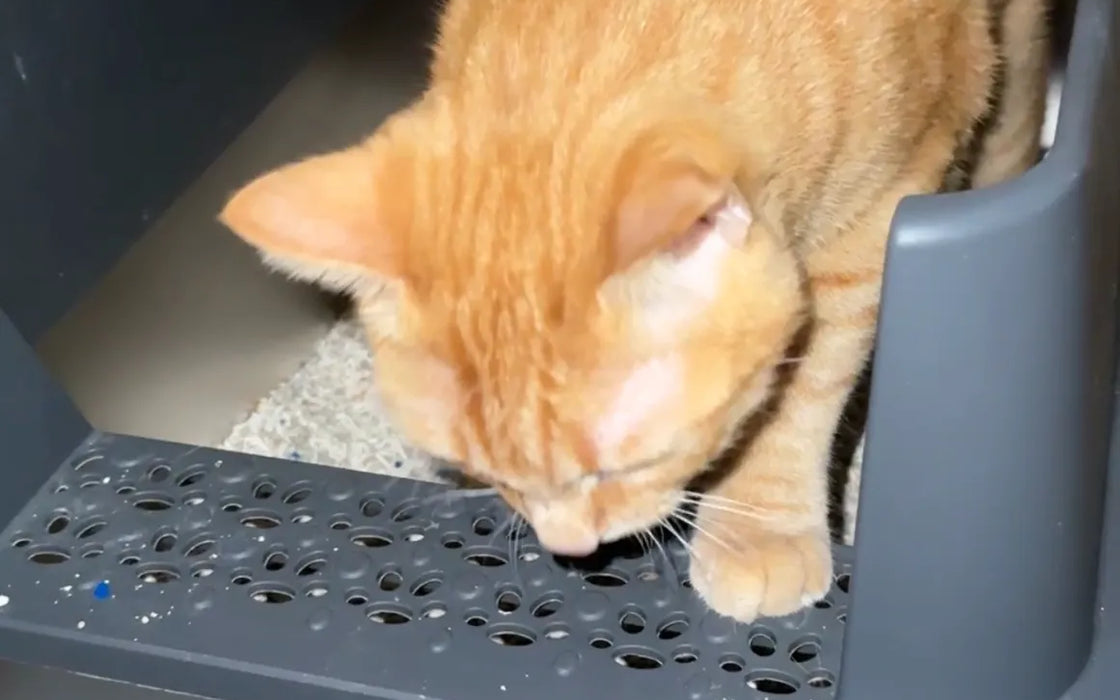
Where Stainless Steel May Help
A well-made stainless steel pan has a simple advantage: the surface is smooth and non-porous. It can be washed, rinsed, and dried without the deep scratch pattern that develops in many older plastic pans. For a household fighting stubborn odor, that can make it easier to return the box to a genuinely neutral baseline.
That matters because a box can look clean to a person and still smell wrong to a cat. But stainless steel is not automatically calm. A tiny steel pan is still tiny. A wobbly steel pan is still unsettling. A sparkling box beside a dryer on spin cycle is still beside a dryer on spin cycle.

| Feature | How it may help day to day | What it cannot do |
|---|---|---|
| Smooth stainless steel base | Makes stuck litter and residue easier to remove; resists odor and staining | Cannot treat bladder inflammation or replace veterinary care |
| Large floor area | Gives the cat room to enter, turn, dig, squat, and leave | Cannot solve conflict if another pet guards the location |
| High sides with an open top | Helps contain spray and scatter while preserving visibility and airflow | May still be difficult if the entrance is too high for that cat |
| Static, non-motorized design | Avoids an unexpected cleaning cycle, beeps, or moving floor | Is not silent on hard flooring; a mat or non-slip pads may help |
 A practical open-top option
XXL 304 Stainless Steel Cat Litter Box
A 24 × 16-inch steel base, high splash guard, open top, low front entry, and non-slip pads—designed for roomy everyday use, including large and senior cats.
A practical open-top option
XXL 304 Stainless Steel Cat Litter Box
A 24 × 16-inch steel base, high splash guard, open top, low front entry, and non-slip pads—designed for roomy everyday use, including large and senior cats.
What the Material Cannot Fix
It is easy to over-credit a new product because the change feels concrete. The cat, however, experiences the whole station. If the box is in a dead-end closet, if two cats must share one guarded doorway, or if the litter suddenly changes from soft and unscented to coarse and perfumed, a better pan may not be enough.

The same is true of water, food, play, rest, and social tension. A cat with FIC may benefit from a more predictable routine, safe hiding and climbing areas, separate resources in a multi-cat home, daily interactive play, and a hydration plan chosen with a veterinarian. Change those pieces thoughtfully. Replacing the pan, litter, diet, fountain, and room layout in one weekend can create a fresh round of uncertainty.

A useful rule: change one bathroom variable at a time whenever possible. If you introduce a steel box, keep the familiar litter and location first. That way the new surface is the only unfamiliar part.
Signs the Current Setup Deserves a Second Look
- Your cat waits nearby and uses the box immediately after you scoop.
- They put only their front half inside, perch on the rim, or cannot turn comfortably.
- They rush out, look over their shoulder repeatedly, or avoid the box when another pet is present.
- They choose the bathmat, laundry, or floor beside the box even when the pan appears clean.
- The empty, washed pan still carries a urine odor.
- An automatic cycle, fan, door, washer, or dryer makes them bolt.
- A senior or painful cat pauses before stepping over the entrance.
None of these behaviors proves FIC, and none proves the box is the only problem. New house-soiling or a sudden change in posture should prompt a veterinary conversation, especially when paired with urinary signs, constipation, reduced mobility, appetite changes, or hiding.

A Low-Stress Litter Box Reset You Can Start This Week
- Book the medical check first. If urinary signs are present, let your veterinarian rule out obstruction, stones, infection, and other causes. Ask before changing medication or diet.
- Count locations, not just boxes. A common starting point is one box per cat, plus one extra, placed in different areas. Three boxes lined up in one room may still function like a single guarded resource.
- Choose enough usable space. Your cat should be able to stand on all four feet and turn without folding around the walls. The Ohio State University Indoor Pet Initiative emphasizes a box large enough for normal standing and turning.
- Keep the route quiet and open. Avoid tight corners, slamming doors, food bowls, and appliances that start suddenly. Make sure another cat or dog cannot trap the user at the entrance.
- Preserve what already works. Put the new box near the accepted box and use the same unscented litter at the same depth. Do not force the cat inside or remove the old pan immediately.
- Scoop at least daily. In a busy multi-cat home or during urinary monitoring, check more often. Record the size and number of urine clumps if your veterinarian asks you to track output.
- Wash without perfume. Empty the pan, use mild unscented soap, rinse thoroughly, and dry it. Avoid leaving strong cleaner or deodorizer smells where the cat's nose will be inches away.
- Watch the cat, not the calendar. Comfortable entry, normal turning, digging, urination, covering, and an unhurried exit are more informative than whether seven days have passed.
How to Introduce a Stainless Steel Box Without Creating More Stress
Some cats walk into a new pan as if it has always been there. Others notice that it sounds different when litter hits the base. Put non-slip pads beneath it, use a washable mat if the room echoes, and add enough familiar litter so the cat is not standing directly on bare steel.
Leave the previous box available during the transition. Once the new box is being used reliably for both urine and stool, you can decide whether the old one should stay, move, or go. In a multi-cat home, “extra” may be exactly what keeps access peaceful.

Frequently Asked Questions
Can a stainless steel litter box cure FIC?
No. FIC is a medical condition. A steel pan may make the toilet easier to clean and reduce certain day-to-day irritants, but diagnosis and treatment belong with your veterinarian.
Is stainless steel always better than plastic for an anxious cat?
No material wins in every home. Size, entry height, stability, litter preference, location, cleanliness, and escape routes can matter more. Steel is most useful when easier cleaning, odor resistance, and durability solve a real problem in the current setup.
Will the metal feel too cold?
The base may feel cooler before litter is added, but the cat normally stands on litter rather than bare metal. Use the familiar litter at a comfortable depth and keep the box away from cold drafts.
Are covered or automatic boxes bad for cats with FIC?
Not automatically. Some cats accept them. A cat who startles at a cleaning cycle, avoids a hood, or feels trapped by a single exit may do better with a roomy, open, static box. Let observed behavior guide the choice.
How many litter boxes should two cats have?
Three is a useful starting point, ideally in separate locations. Adjust for the cats' relationship, home layout, mobility, and individual preferences.
What is the most important change during an FIC flare?
Contact your veterinarian and follow the medical plan. At home, keep resources easy to reach, routines predictable, and the litter area clean and quiet. Do not punish accidents.
The Goal Is Not a “Perfect” Box. It Is an Easier Day.
A stainless steel litter box earns its place when it removes practical friction: old odor that will not wash out, a cramped pan, a difficult entry, or a setup that is hard to keep clean. It should not carry the impossible job of curing FIC.
Start with medical care. Then look at the room from the cat's height. Give them enough space, a clean surface, a quiet route, and a way out. Those ordinary details are not glamorous, but for a sensitive cat, predictability is often the point.
For a roomier daily setup
Build the bathroom around the cat
Explore a spacious, high-sided, low-entry design that is made to be easier to scoop, wash, and use every day.
Sources & Further Reading
Health disclaimer: This article provides general educational information and is not a substitute for veterinary diagnosis or treatment. Contact a veterinarian about urinary signs, sudden litter box avoidance, pain, or behavioral changes. Repeated straining with little or no urine is an emergency.


Leave a comment