
The honest version
A sifting litter box does not make litter duty disappear. What it can do is replace a lot of the digging, poking and accidental tossing of clean litter with one lift-and-filter step. When the litter matches the tray and the clumps are firm, the routine is noticeably less annoying.

Here is the part most cat owners recognize: you remove the obvious clump, find another stuck in a corner, then chase three little pieces that broke off under the surface. By the time the box looks clean, a surprising amount of perfectly good litter has gone into the trash too.
The usual litter-box complaints
- You scoop daily, but small pieces still seem to hide at the bottom.
- A fresh urine clump collapses the moment the scoop touches it.
- An enthusiastic digger turns one firm clump into several annoying fragments.
- Every cleanup carries some unused litter into the trash.
Why a Regular Scoop Starts to Feel Annoying
A standard pan makes you do two things at once: locate every piece of waste and shake off as much clean litter as possible. That works fine with big, firm clumps. It is much less satisfying when a clump is soft, glued to the bottom or already broken into crumbs.
In a multi-cat home, that small inconvenience repeats several times a day. The actual scooping may only take a few minutes, but the constant digging and checking is what makes the chore feel longer.
What a Sifting Litter Box Really Changes
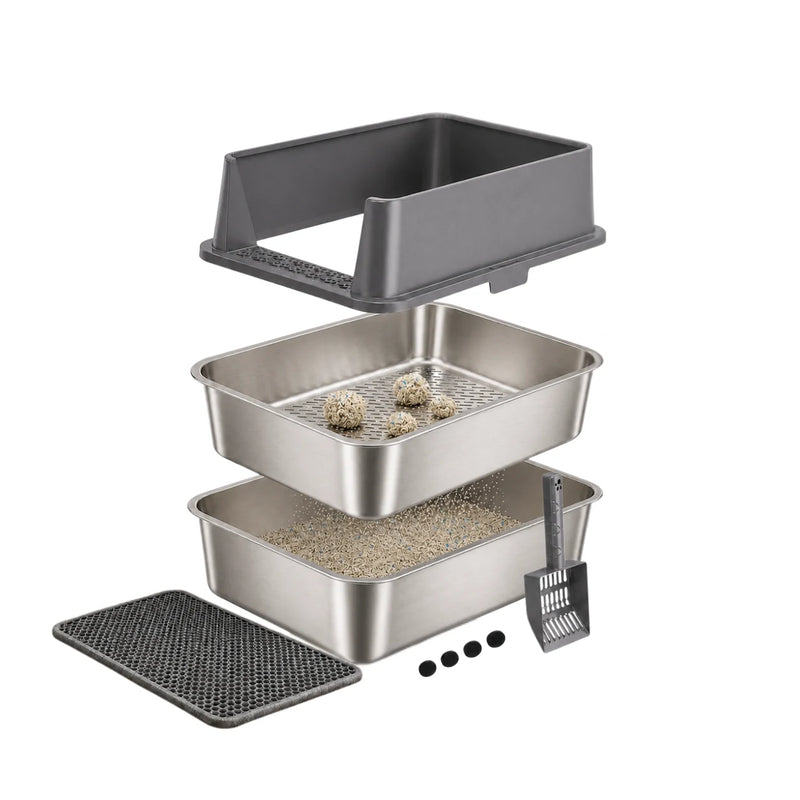
The setup is not complicated. A perforated tray sits with a solid base pan, allowing loose litter to fall through while larger clumps and solid waste stay on top.
The useful part is coverage: instead of searching one corner at a time, you filter most or all of the litter in one pass. The catch is that the holes, litter size and clump quality all need to work together. When they do, cleanup feels easy. When they do not, you end up shaking the tray and wondering why you bothered.

How the Lift-and-Sift Routine Actually Works
Once the clumps have had time to firm up, the routine is straightforward:
- Lift. Bring the tray up slowly and keep it level.
- Let it drain. Give the loose litter time to fall into the pan below.
- Dump the waste. Tip the clumps left in the tray into a lined bin.
- Reset. Return the clean litter and put the box back together.
What works best
Lift slowly and resist the urge to shake
A slow lift gives loose litter time to fall. If needed, use one or two gentle side-to-side movements—not a full workout.

The biggest practical tip is simple: do not sift a fresh, soft urine clump unless you have to. It can smear across the metal or break into damp crumbs. Waiting for it to firm up usually saves more time than rushing the cleanup.

What Gets Easier—and What Does Not
Less digging around
You filter a broad area at once instead of checking every corner with a small scoop.
Less clean litter tossed out
Loose granules fall into the pan instead of leaving with each scoopful of waste.
Fewer hidden pieces
With firm clumps, a full sift can catch fragments that are easy to miss during a quick spot-clean.
No motor to babysit
There is no app, cord, sensor or mechanical cycle. You lift it when you are ready.
Stainless steel is also straightforward to rinse and wipe, and it avoids the deeply scratched surface that old plastic boxes can develop. Still, the sifter itself is not odor control. The box smells better only if the easier routine means waste gets removed consistently.
The Litter Match Matters More Than the Marketing
Yes, many sifting boxes work with regular clumping litter. But “works” depends on two things: the loose grains must pass through the holes without a fight, and the finished clump must be large and firm enough to stay above them.
- Usually the least fussy: firm clumping clay or another fine-to-medium clumping litter.
- Test before committing: lightweight formulas, mixed textures and plant-based clumping litter.
- Often awkward: oversized pellets or any litter that only moves through after hard shaking.
The Small Adjustments That Make Sifting Better
- Do not overfill the box. Every extra inch of litter is weight you have to lift.
- Give urine clumps time to set. Firm clumps handle the lift; fresh ones tend to smear or crumble.
- Lift slowly. The goal is separation, not a dust cloud.
- Top up instead of starting over. Add fresh litter as needed, then do a full empty-and-wash on your usual schedule.
- Keep the scoop. It is still the better tool for one fresh clump, a stuck spot or a two-second cleanup.
A common mistake
More shaking usually makes a bigger mess
Hard shaking breaks clumps and throws dust around. If gentle movement is not enough, check the litter depth and granule size instead.

The Problems People Notice After the Honeymoon Period
“The clump fell apart when I lifted the tray.”
Most likely it was too fresh, too soft or already damaged by digging. Let it firm up when possible, and use the scoop on sticky areas rather than scraping them across the sifter.
“The tray is really heavy.”
That is the tradeoff nobody should hide: a large tray full of litter has weight. Try a slightly shallower fill—without taking away your cat's ability to dig and cover—and lift with both hands.
“My cat still kicks litter onto the floor.”
A sifter handles waste separation, not tracking. High sides help with dramatic digging, and a textured mat can catch some grains on the way out, but neither will make the floor perfectly litter-free.
“Do I still have to wash the box?”
Yes. Sifting is the daily filter step, not the deep-clean step. The pan, tray and guard still need to be emptied and washed. Anyone promising a maintenance-free litter box is promising too much.
So, Is a Sifting Litter Box Worth It?
For someone who already cleans regularly and mainly hates the search-and-scoop part, it can be a meaningful upgrade. It also makes sense if wasting clean litter bothers you or you want a quiet manual setup instead of an automatic machine.
It is less convincing if your preferred litter does not pass through easily, you dislike lifting a loaded tray, or your cat needs a very low entrance. The honest answer is not “yes for everyone.” It is “yes, if the tray, litter and cat are a good match.”
Sifting Litter Box vs. Regular Scoop
| What changes | Sifting litter box | Regular pan + scoop |
|---|---|---|
| Daily cleanup | Filters most of the litter in one lift | You locate and remove each clump |
| Clean litter | Loose grains return to the pan | Some clean grains usually leave with the scoop |
| Tiny clump pieces | Firm fragments are easier to catch in one pass | Tiny pieces take more searching |
| Litter compatibility | The granules must suit the openings | More forgiving across litter types |
| Power / noise | Manual and quiet | Manual and quiet |

The roomy manual option
The 4FurBaby XXL Sifting Litter Box
This is for cat owners who want the lift-and-sift routine but do not want to give up the space and visibility of a large open box.
- 23.6 × 15.7-inch base pan and sifting tray
- Approximately 6-inch high splash guard
- Stainless steel base pan and sifting tray
- Includes scoop and litter-catching mat
Questions That Usually Come Up
Can I use regular clumping litter in a sifting litter box?
Usually, yes. The loose grains need to fall through without hard shaking, while the clump needs to stay intact on top. Test a cupful first; it is much easier than discovering a bad match after filling the entire box.
Do I still need a litter scoop?
Keep it. The sifter handles the full cleanup, but a scoop is still better for one fresh clump, a stuck corner or a quick spot-clean.
How often should I sift the litter?
Daily is a practical starting point, but a two-cat household using one busy box may need more. Watch the box rather than the clock: remove waste often enough that your cat never has to hunt for a clean spot.
Why do fresh pee clumps break apart?
The litter has not finished absorbing moisture. Lift too soon and the clump can crumble or smear across the tray. If your schedule allows it, give the litter a little more time and come back.
Will a sifting litter box stop litter tracking?
No. High sides help contain litter launched during digging, and a textured mat catches some grains from paws, but the sifting function itself has nothing to do with tracking.
Can a sifting litter box hurt my cat's paws?
A properly finished tray should not have exposed sharp edges. Check the rim, openings, corners and connections before use. If you find a burr, dent, sharp spot or bent section, do not use that part—contact the seller or manufacturer.
How do I put the sifting tray back after I lift it?
A second compatible solid pan makes this much less awkward. Lift the sifter and discard the waste, place the empty sifter in the second pan, then pour the clean litter from the first pan back into the tray. The second pan becomes the new base, and the empty first pan is ready for the next cleanup.
Not Maintenance-Free—Just Less Fiddly
You still have to remove waste, add fresh litter and wash the box. The win is smaller and more believable: on a good day, cleanup becomes one slow lift instead of several minutes spent digging for the last hidden clump.




Leave a comment