
Practical cleanup routine
How to Clean a Cat’s Litter Box: A Simple Daily and Weekly Routine
The easiest litter box routine is consistent rather than complicated: scoop every day, keep the litter at a usable depth, wash the box regularly, and deal with stuck waste before residue builds up.
Scoop waste, level the litter, check corners, and wipe the rim or nearby floor if needed.
Fully refresh the box and wash it with warm water; use unscented soap only if needed and rinse thoroughly.
Inspect the box, scoop, mat, and surrounding area for residue, damage, or changes that make cleaning harder.
Clean Litter Box, Calmer Cat, Better Apartment
Litter box cleaning is not just about odor. Cats generally prefer clean, accessible litter boxes and may avoid boxes that are dirty, strongly scented, difficult to enter, or placed in an uncomfortable location.
That is why learning how to clean a cat litter box matters before there is a problem. A good routine helps control odor, keeps the box more inviting, and makes it easier to notice changes in urine, stool, or litter box use that may be worth discussing with your veterinarian.
“I clean it when it smells.”
Waiting for odor usually means waste has already sat too long, litter is breaking down, or urine has reached the box surface.
“I clean it before it smells.”
Daily scooping keeps the box easier to maintain and reduces one common reason cats may become reluctant to use it.
Helpful reference: ASPCA notes that cats generally prefer clean litter boxes, recommends scooping at least once a day, and advises a full wash with warm water and unscented soap, baking soda, or no soap about once a week.
How to Scoop a Litter Box Without Turning It Into a Mess
The easiest litter box cleaning routine starts with scooping correctly. You are not just removing the obvious poop. You are checking the corners, the bottom, the entry edge, and the spots where wet litter can glue itself to the box.
Lift the top layer first
Start with visible waste. For clumping litter, lift clumps slowly instead of breaking them apart.
Check corners and low spots
Corners collect wet litter, small broken clumps, and stuck poop. Scrape gently rather than stabbing the box.
Level the clean litter
After scooping, spread the litter back evenly so your cat has enough clean depth to dig and cover.
Wipe the rim and nearby floor
A quick wipe around the entry area helps with apartment smell, litter dust, and paw-track mess.
How Often Should You Clean a Litter Box?
The real answer depends on your litter type, number of cats, box size, and whether your cat is a kitten, senior, high-sprayer, or heavy digger. But a simple litter box cleaning schedule gives you a reliable starting point.
Daily litter box cleaning
Scoop poop and urine clumps, check for stuck litter, level the litter, and clean visible mess around the box.
Top up the litter
Add clean litter when the usable depth gets low, while keeping the litter type and depth reasonably consistent for your cat.
Full litter change and wash
Empty the box, wash it with warm water, rinse thoroughly, dry it, and refill with fresh litter. Adjust the timing if your litter manufacturer gives different care instructions.
Inspect the whole setup
Check the box, scoop, seams, mat, and nearby floor for residue or damage that makes routine cleaning harder.
Helpful reference: AAHA / AAFP states that litter boxes should be cleaned regularly, replaced, and scooped daily.
How to Deep Clean a Litter Box Without Using the Wrong Cleaner
A deep clean is not about making the box smell like perfume. It is about removing urine residue, stuck litter, poop marks, dust, and old odor without leaving behind a scent your cat hates.
A simple routine is usually enough: empty the box, loosen stuck waste, wash with warm water, and rinse thoroughly. If residue needs more than water, use a small amount of mild unscented soap, then rinse well and dry the box before adding fresh litter.
Empty the litter
Bag used litter before washing. Do not dump clumping litter into sinks, tubs, or toilets because it can harden and clog plumbing.
Remove stuck waste
Use the scoop edge or a dedicated scraper gently. Avoid gouging plastic because scratches can trap odor later.
Wash the box
Start with warm water. If needed, use mild unscented soap or a small amount of baking soda, then rinse thoroughly so no residue or strong scent remains.
Rinse and dry fully
Cleaner residue and moisture can make fresh litter clump early, stick to the bottom, or smell strange to your cat.
Helpful reference: ASPCA General Cat Care advises scooping solid waste at least once daily and avoiding ammonia, deodorants, and scents such as lemon when cleaning litter boxes.
How to Remove Litter Box Odor, Stuck Poop, and Bottom Clumps
Persistent litter box odor often comes from waste sitting too long, saturated or broken-down litter, residue on the box surface, or material trapped around the box. Start by finding and removing the source rather than masking it with fragrance.
Litter box poop stuck to bottom
Add enough litter depth, scoop gently, and wash the bottom before residue dries into the surface. Very shallow litter can make it easier for urine or stool to reach the box surface.
Litter stuck to litter box
Wet clumps may stick when litter is very shallow, the surface is worn, or clumps are disturbed before they firm up.
Clean litter box smell returns fast
If odor returns quickly after scooping, consider whether the litter needs a full change and whether residue remains on the box, scoop, mat, or nearby floor.
Apartment litter box odor
Scoop consistently, avoid heavy fragrance, and sweep, vacuum, or clean tracked litter around the entry and mat as needed.
How to Clean Different Litter Box Setups
Cleaning details vary with litter type and box design. Follow the litter manufacturer’s replacement instructions, then adjust the routine based on how quickly the box becomes soiled in your household.
How to clean clumping litter box setups
Scoop carefully so urine clumps stay intact. Remove loose contaminated pieces and replace the litter according to the product directions or when it no longer performs well.
Change sooner, not later
Non-clumping litter does not form removable urine clumps, so regular full replacement is especially important. Follow the product’s recommended change interval.
Keep it dry
For tofu litter, scoop according to the product directions and keep the box fully dry after washing so fresh litter is not exposed to leftover moisture.
Watch saturation
Follow the crystal litter manufacturer’s instructions for stirring, scooping, and full replacement, because products vary in how they handle urine and saturation.
How to clean pine pellet litter box setups
Remove poop daily and sift sawdust from intact pellets. A sifting tray can make pellet maintenance easier.
How to clean covered litter box setups
Clean the lid, seams, entry edge, and inside walls in addition to the litter pan, since a covered design adds more surfaces where residue can collect.
How to clean plastic litter box surfaces
Wash gently and inspect the surface for deep wear, cracks, or scratches that make the box harder to clean thoroughly.
How to clean stainless steel litter box surfaces
Wash, rinse, and dry the smooth surface. Stainless steel is generally less prone to the deep surface scratching that can develop in worn plastic pans.
How to Dispose of Cat Litter and Cat Poop Safely
Litter box maintenance does not end when waste leaves the box. Disposal and hand hygiene matter, especially in small apartments, shared bathrooms, and homes with pregnant or immunocompromised people.
Use a small trash bag or waste bag. Tie it before placing it in household trash.
Avoid flushing litter unless the product and local rules clearly allow it. Clumping litter can clog plumbing.
Wash hands with soap and water after handling litter, waste, scoops, or used bags.
If someone is pregnant or immunocompromised, CDC recommends having another household member clean the litter box when possible. If that is not possible, wear disposable gloves and wash hands with soap and water afterward.
Keep litter tools away from food-preparation areas, and wash hands with soap and water after handling the box, scoop, or waste.
Two Cleaning Tools That Actually Fit the Routine
The right tool can make routine maintenance easier when clumps are difficult to lift cleanly, corners are hard to reach, or a pellet setup needs regular sifting.
A sturdy scoop can support daily cleaning, while a sifting tray offers a different workflow for litter that separates well by particle size. Pine pellets are a particularly practical use case because used pellets can break down into finer sawdust.
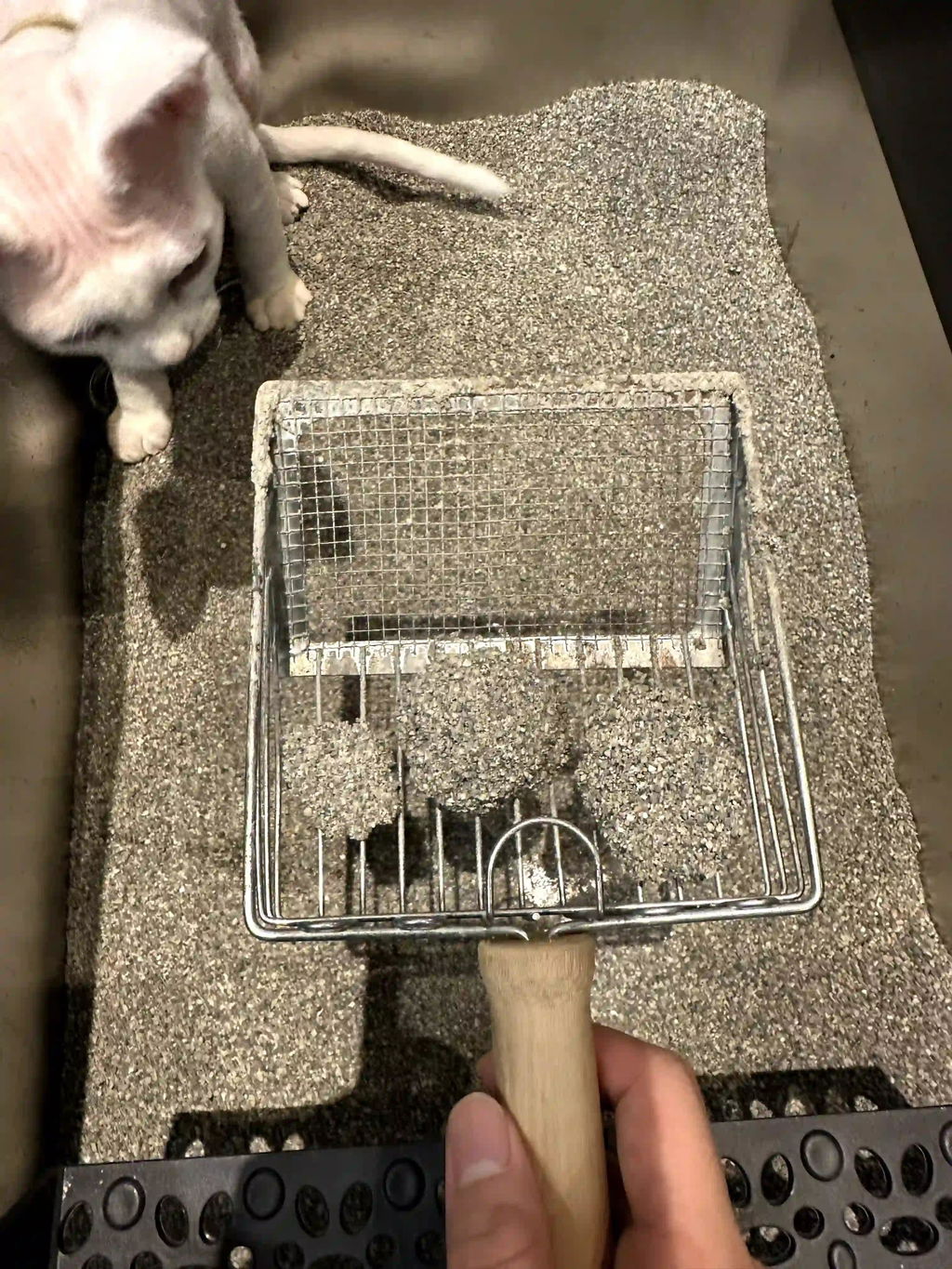
2-in-1 stainless steel litter scoop
Daily scooping is easier when the scoop can handle more than one job. This 2-in-1 design includes a solid scoop and a mesh scoop, so you can lift poop, collect broken clumps, check corners, and separate waste from clean litter without constantly switching tools.
The stainless steel scoop is corrosion-resistant and easy to rinse, and the product combines a solid scoop with a mesh scoop for different cleanup tasks.
View stainless steel litter scoop
Stainless steel sifting litter tray
A sifting tray separates material by particle size. With pine pellets, finer used sawdust can pass through while larger intact pellets remain above. Other litter types may sift differently depending on particle size and clumping behavior.
This can be especially useful in pine-pellet routines. Sifting may also reduce how much usable litter is discarded when the litter separates cleanly, but the result depends on the litter itself.
View stainless steel sifting trayPractical note: The sifting tray is a tray insert, not a standalone litter box. It is best used as part of a matching litter box setup, especially for homes that want a cleaner pine pellet or larger-particle litter routine.
Common Litter Box Cleaning Mistakes
Using strong fragrance
Perfume does not equal clean. Strong scents can make the box less attractive to a cat.
Only scooping the surface
Bottom clumps and corner residue are often where odor begins.
Keeping a worn box that is hard to clean
Deep wear, cracks, and scratches can make a plastic box harder to clean thoroughly over time.
Changing too many things at once
Changing litter, box style, location, and cleaning products all at once can make it difficult to tell which change your cat accepts or dislikes.
FAQs About Cat Litter Box Cleaning
How often to scoop litter box waste?
Scoop at least once a day. Heavily used or multi-cat boxes may need more frequent scooping to stay clean.
How often to change cat litter completely?
It depends on litter type and use. Change it when odor remains after scooping, litter breaks down, clumps fall apart, or the bottom feels dirty even after spot cleaning.
Should you wash litter box every week?
ASPCA recommends a full litter-box wash and litter replacement about once a week as a general guideline. Your litter product and household setup may require some adjustment to that schedule.
What cleaner is safe for litter box cleaning?
Warm water is the simplest starting point. If needed, use a small amount of mild unscented soap and rinse thoroughly. Avoid ammonia, heavy fragrance, deodorizing sprays, and citrus-scented products inside the box.
Can you use vinegar for cleaning litter box odor?
Vinegar is not necessary for routine litter-box cleaning. Warm water, with a small amount of unscented soap if needed, is usually simpler. Never mix vinegar with bleach or other cleaning products.
Can you use bleach to disinfect a litter box?
Bleach should not be a routine litter-box cleaner. If disinfection is specifically required, follow veterinary or product-label guidance exactly, ventilate the area, and never mix bleach with ammonia, vinegar, or other cleaners.
How do you clean a litter box without making a mess?
Scoop slowly, keep a trash bag close, check the corners, use a mat under the entry area, and wipe the rim before litter dust spreads across the floor.
When should you replace a litter box?
Replace a box when it is cracked, deeply scratched, holding odor after washing, too small for your cat, or difficult for a kitten or senior cat to enter comfortably.


Leave a comment